

June 5, 2026
How Corporate Event Planners Help Businesses?
You have a big event coming up. It can be a company conference, an annual convention, or a leadership summit. You know what you want it to feel like. You just are not sure how to get there.
That is exactly where corporate event planners come in. They are the ones who organize and manage different events, such as product launches, conferences, company meetings, etc., for your organization. They take charge of the planning and execution.
To help you find the best planner suited to your event requirements, we have prepared a guide for you. Keep reading to know more.
Who are Corporate Event Planners?
They are professionals who manage the end-to-end process of planning, coordinating, and executing business events. This includes conferences, conventions, sales meetings, board retreats, trade shows, and everything in between.
Their role is to ensure events run smoothly. They put up events that reflect the company’s goals and brand image. They also ensure that the events create a positive experience for attendees while staying within budget and timeline requirements.
Here are the aspects that a skilled event planner manages for your organization:
- Site selection and venue negotiation
- Budget planning and cost control
- Vendor coordination and contract management
- Housing and attendee registration
- On-site execution and logistics
- Speaker and entertainment sourcing
- Catering and banquet management
Why Companies Work with Corporate Event Planners?
Most businesses do not plan events every day. That means every new event comes with a learning curve. Corporate event planners have already climbed that curve many times over. They know the industry. They know the vendors. They know what to watch out for.
Here is why you must hire professional planners for your events:
They Save You Time
Time is your most limited resource. When your internal team handles event logistics, they are pulled away from their actual work. Due to this, they miss their deadlines, and details get lost. Hiring a professional planner takes that weight off your team’s shoulders.
They Save You Money
Contrary to popular belief, an experienced planner will save you money. This is because they have long-term relationships with vendors and venues. The established relationship means you will get better rates and better terms. Also, they know how to prevent budget leaks during event planning, which saves you a lot of money.
They Reduce Risk
When something goes wrong at an event, it reflects on your organization. Issues like miscalculation in seating arrangement, last-minute cancellation of the speaker, and catering delay are pretty common in events.
Planners anticipate these problems before they happen. Even if something unexpected happens, after planning everything, professionals will take care of that without disrupting anyone.
They Bring Industry Connections
A well-connected planner already knows who to call. That saves you weeks of research and guesswork. They have access to the following resources
- A nationally recognized keynote speaker related to your industry.
- A production company with quality AV execution.
- A hotel that offers group rates and block booking.
Experience Across Event Types
For better outcomes, you must look for a planner who has experience working with different types of events and varied industries. Anyone who has nonprofit conventions
Look for a planner who has worked across different industries and event formats. Government conferences, nonprofit conventions, direct selling summits, and sporting events all have different needs. A planner with broad experience adapts more easily.
Transparent Communication
You should always know what is happening with your event. An accountable planner will keep you informed about all the progress. Also, a skilled professional would respond quickly and never keep you hanging.
Full-Service Capabilities
Some planners handle only part of the process. Look for one that can manage everything from site selection to on-site execution. Fewer handoffs mean fewer things fall through the cracks.
Strong Vendor Relationships
Ask who they work with and how long those relationships have been in place. A planner with established vendor partnerships is the one who is considered reliable by industry players.
Verifiable Results
You must also check for industry accreditations, long-term partnerships, and client testimonials for the planner. These factors are a trademark for anyone who delivers on their commitment.
How the Planning Process Actually Works?
Understanding the planning process helps you know what to expect when you work with a corporate event planner.
Step 1: Goal Setting
The first conversation is about what you want to achieve, as goal identification shapes everything else. Here are the questions you need to ask yourself:
- Are you launching a product?
- Are you recognizing top performers?
- Are you training a new team?
Step 2: Site Selection
Once the goals are clear, professionals get going with venue selection. The choice of venue depends on the location, rate, capacity, and amenities of the venue. A good planner will bring you multiple options.
Step 3: Contract Negotiation
A skilled planner will review complex venue contracts in detail. It would save your corporation from penalties and unfair clauses.
Step 4: Logistics Coordination
At this stage, a planner coordinates and confirms details like food menu, drink options, room listings, registration systems, AV requirements, speaker schedules, and transportation.
Step 5: On-Site Execution
On the event day, the planner will manage timelines, brief the staff, and solve every problem efficiently.
Step 6: Post-Event Review
After the event, a good planner helps you review what worked and what could be improved. This will be helpful for you in the long run.
Common Mistakes Organizations Make Without a Planner
If you have ever tried to plan a large event internally, you know how quickly things can unravel. Here are some of the most common issues organizations face without professional support.
- Underestimating the workload
- Paying too much for the venue
- Poor attendee experience
- No contingency planning
Industries That Rely on Corporate Event Planners
Corporate event planning is not limited to one type of organization. Planners organize and manage events for a range of organizations, such as:
- Government agencies
- Nonprofit organizations
- Direct selling companies
- Religious organizations
- Sports organizations
- Higher education institutions
Questions You Must Ask Before Hiring a Professional Planner
While hunting for the right planner, you must ask the following questions:
- How many events have you organized and managed?
- What is the size of the events that you have organized?
- How do you go about site selection?
- What is your approach to handling contract negotiations?
- How will you deal with an unprecedented situation on D-Day?
- Are you comfortable sharing reviews from your previous clients?
Final Thoughts
A corporate event is an opportunity for you to strengthen relationships and make an impression. Also, you deliver value to your attendees through such an event.
The right corporate event planner makes that possible. They bring experience, structure, and relationships that most organizations simply do not have in-house.
Ready to start planning your next corporate event?
Global Event Services is a full-service meeting and event management company with decades of experience across industries nationwide and internationally. From site selection to on-site execution, we handle every detail so you can focus on what matters most.
Schedule a consultation with our team today.
Frequently Asked Questions
01
What does a corporate event planner do?
A professional planner defines goals, chooses a venue, coordinates with vendors, and oversees on-site execution.
02
How much does it cost to hire a professional event planner?
The cost depends on the event size, services offered, venue, catering services, and logistics.
03
When should I start working with a professional planner for a business event?
The timeline depends on the size and nature of the venue. If the event is a large one, you must start planning 6-9 months before the event day.
04
Can a professional planner handle international events for US companies?
Yes, an experienced planner with global connections can smoothly manage events beyond the US borders.
05
What is the difference between a professional planner and an event coordinator?
A planner is involved from the beginning, helping to shape strategy and logistics. A coordinator typically manages the day-of execution.
Recent Blogs
September 12, 2026
September 5, 2026
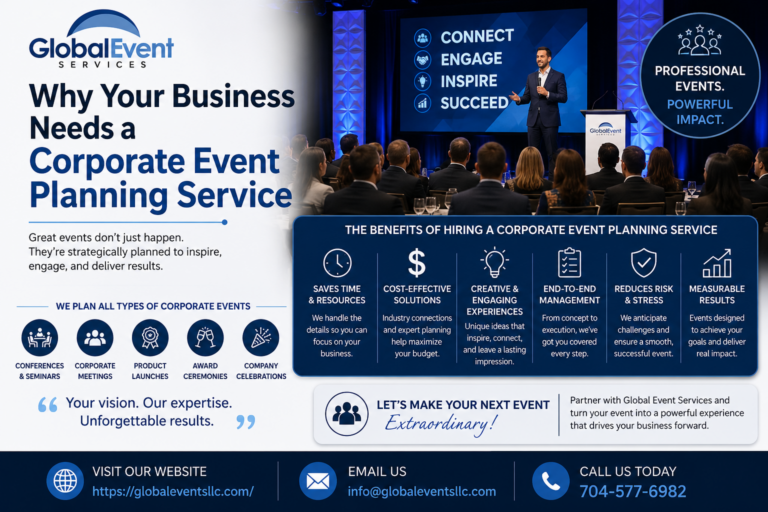
Why Your Business Needs a Corporate Event Planning Service
August 28, 2026
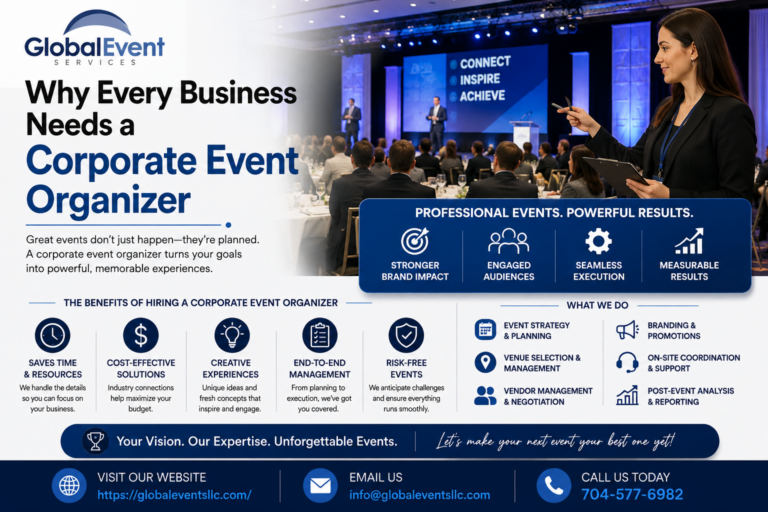
Why Every Business Needs a Corporate Event Organizer