
August 7, 2026
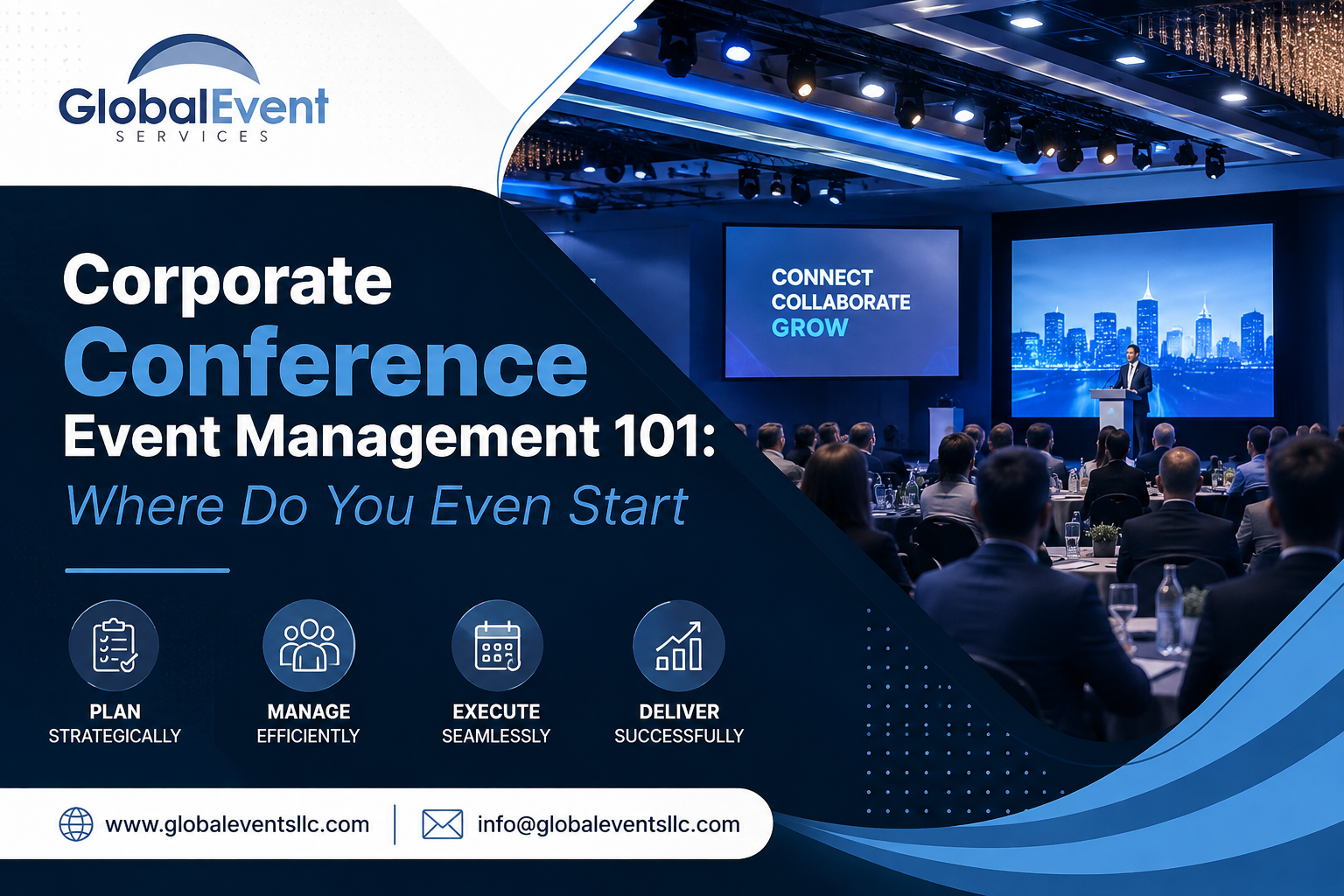
Corporate Conference Event Management 101: Where Do You Even Start
You have a big job ahead. Maybe it is a leadership retreat. Maybe it is a sales kick-off. Maybe it is a big industry event with hundreds of people flying in from all over. You have no idea where to begin. If this sounds familiar, you are not alone. Corporate conference event management can feel hard at first. But it gets much easier once you break it into small steps and know where to start.
In this blog, we will walk through the basics of planning a big event. We will start at the very beginning and go all the way to the final touches that make everything run smoothly.
Start with Site Selection
Once your purpose is clear, it is time to pick a location. It means matching the venue to your budget, your crowd size, and your goals.
This step trips up many people. There is more to it than it looks. You have to think about ease of access, room size, tech setup, and even parking and nearby hotels for out-of-town guests. Skilled planners know how to weigh all of these things at once. This is really where corporate conference event management starts to show its value. Getting this part right sets the tone for everything that follows.
Negotiate Contracts Like a Pro
Here is something many first-time planners do not know. Every item, from the venue to the food to the sound system, comes with its own terms. None of those terms are fixed in stone.
A company with strong buying power and long-standing contacts can win better deals than a single in-house team working alone. That kind of power comes from years of experience across hundreds of events. It does not come from one phone call. There is almost always room to negotiate.
Get Housing and Registration Sorted Early
Guest logistics can quietly spin out of control if you are not paying close attention. Hotel room blocks need to be booked early, especially for big conferences where hundreds of guests need a place to stay in the same area.
Registration matters just as much. A messy sign-up process or a slow check-in line sets a bad tone before the event even starts. Getting this right early saves headaches later. Two things deserve extra attention here:
- Booking hotel rooms well before the event date
- Making the sign-up and check-in process fast and simple
Nail the On-Site Execution
All the planning in the world means nothing if the event day itself falls apart. On-site execution is where every piece has to come together at once. Registration desks, session timing, and sound equipment all need to run smoothly in real time. Things will go wrong sometimes. That is just how live events work. What matters most is having experienced people on the ground who can fix problems quietly and keep the event moving.
This is really the heart of corporate conference event management. It is not only about the planning that happens months ahead. It is about having steady hands guiding the room once the doors open and guests walk in.
Do Not Skip the Post-Event Wrap-Up
Take time to think about what worked and what did not. Gather feedback. Check whether you hit your original goals. These small steps teach valuable lessons that make your next event even better.
In Summary
Planning a corporate conference can feel like a lot, but it becomes much easier with a clear plan. Start with your purpose. Build from there with strong site selection and smart contract talks. Do not overlook the small logistics either. Experienced event teams know how all of these pieces fit together, because they have done it again and again across many different events.
Ready to Plan Your Next Conference the Right Way?
Planning a great corporate conference takes more than good intentions. It takes real planning, deep knowledge, and strong connections. We bring site selection expertise, trusted vendor relationships, and years of know-how to make the whole process simple for you. Contact Global Event Services LLC today and start building an event your guests will remember for years to come.
Frequently Asked Questions
01
What is the first step in planning a corporate conference?
Firstly, you have to determine the purpose of the event. It will influence all further decisions regarding location and speakers.
02
How far in advance should one plan a conference?
Two or three months can be enough for a small conference, while larger conferences can require up to six months or even a year to plan.
03
Why is contract negotiation so important?
Almost everything can be negotiated regarding venues, catering, and speaker fees. Good negotiating skills can help you cut down costs substantially without reducing their quality.
04
What is the most common mistake made by first-time planners?
The biggest mistake is choosing a location prior to determining the purpose of the conference and its target audience.
05
Is it better to plan in-house or hire outside help?
It depends on the nature of your event. Sometimes it is preferable to engage professional outside assistance in planning and hosting larger events.
Recent Blogs
September 12, 2026
September 5, 2026
Why Your Business Needs a Corporate Event Planning Service
August 28, 2026
Why Every Business Needs a Corporate Event Organizer