
Category: Enterprise Meeting Management
August 1, 2026
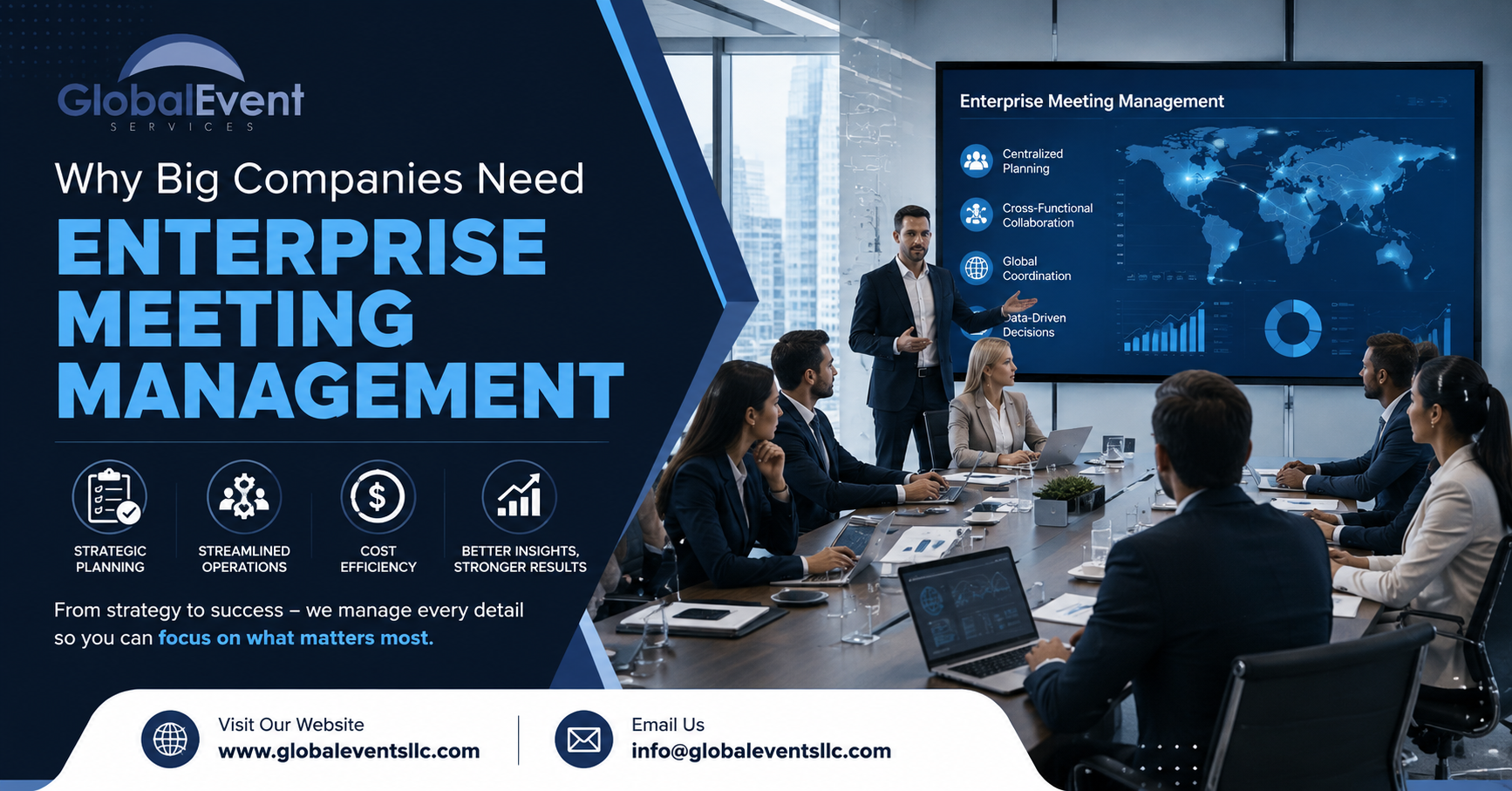
Why Big Companies Need Enterprise Meeting Management
Big companies hold lots of meetings. They hold meetings for leaders, sales teams, training, and customers. These meetings happen all year long. Without a good plan, things can get messy fast. This is why enterprise meeting management matters so much for big companies.
It is not just about booking a room or sending invites. It is about building a simple system. This system helps a company plan meetings across many teams and many places. A good system keeps things clear, saves time, and helps every meeting go smoothly.
The Scale Problem Companies Do Not Expect
When a company grows, its meetings grow too. But meetings do not grow simply. A small company may hold a few meetings each month. A big company with many workers may run hundreds of meetings in many cities at the same time.
Every meeting needs its own budget, vendors, and schedule. Managing all of this without a system is hard. Many teams start with spreadsheets, emails, and simple tools. These tools may work at first. But as the company grows, problems begin to show up.
Two teams might book the same room. A budget might go too high. Important details might get lost. Food orders might not match the guest count. These small mistakes can turn into big problems.
Enterprise meeting management helps stop these problems. It builds a clear process. It brings order to every part of meeting planning. It helps teams stay on track.
Keeping Every Office in Sync
Big companies often have offices in many cities. Each office may plan meetings its own way. This might seem fine at first. But it can cause problems over time.
One office might follow strong steps. Another office might skip important details. This creates different experiences for workers and customers. A company needs the same quality everywhere. This protects how people see the company.
A good meeting system helps every office follow the same steps. Picking vendors becomes easier. Handling contracts becomes easier. Making timelines becomes easier. Everyone knows what to do and when to do it.
This makes things better for everyone. It does not matter which city hosts the meeting. People get the same great care and quality every time.
Keeping Costs Low Without Losing Quality
Meetings cost money. Big companies spend on rooms, food, and tech. They spend on speakers, travel, and hotels too. When a company runs many meetings each year, these costs add up fast.
Good planning helps keep spending under control. Skilled teams know how to build strong budgets. They find better deals. They build good relationships with vendors. They know how to get fair prices.
Good planning does not mean picking the cheapest choice every time. It means making smart choices. Some parts need careful spending. Other parts need extra care. Guest comfort matters. Food quality matters. Good tech matters too. These things shape how people remember a meeting.
A skilled team knows where to save money. They also know where to spend more. This balance helps companies host great meetings without wasting money. Strong enterprise meeting management leads to smarter choices and better control of money.
Lowering Risk With Smart Planning
Big meetings have many moving parts. Problems can pop up at any time. A speaker might cancel at the last minute. A hotel might mess up a booking. Bad weather might delay travel.
For a big company, these problems can cause stress. They can cause money loss too. A meeting that took months to plan should not fail because of one surprise.
Skilled planners know how to get ready for these moments. They build backup plans. They think ahead. They know what risks might show up. They know how to handle them fast.
Strong planning includes:
• Making backup plans for surprise problems
• Checking vendor contracts closely before signing
These steps help meetings stay on track, even when problems appear.
Fitting Different Kinds of Groups
Every group has different needs. A government group may need a different plan than a sales company. A nonprofit may plan events in a different way than a sports team.
A good meeting system must fit the group. It must fit their goals. It must fit their audience. It should not use the same plan for every group.
Skilled teams understand these differences. They build plans that match each group’s needs. They keep the process organized. They keep it reliable too.
This is one reason many big groups choose enterprise meeting management support. They get help that fits their goals. They do not get stuck with a basic plan that does not work for them.
Building Better Meetings for the Long Run
Big companies need more than good wishes to run great meetings. They need systems that support growth. They need systems that control costs. They need systems that cut down mistakes.
A strong planning process helps companies handle many meetings without losing quality. It keeps teams connected. It helps every meeting support the company’s goals.
With the right support, meetings become much easier to run. Teams spend less time fixing problems. They spend more time creating great experiences.
Ready for Easier Meeting Management
Running meetings for a big company does not have to feel hard. With the right system, every meeting stays organized. It stays on budget. It creates a better experience for everyone.
Global Event Services LLC gives companies the planning support they need. They bring vendor knowledge and strong coordination skills to every meeting. The right approach to enterprise meeting management helps companies save time, cut stress, and build meetings that reach their goals.
Frequently Asked Questions
01
What is enterprise meeting management?
It is a system for planning and managing meetings across a large organization. It helps different teams and locations follow one organized process.
02
How is this different from regular event planning?
Regular event planning usually focuses on one event. Enterprise meeting management handles many meetings, teams, and locations at the same time.
03
Why should companies avoid handling everything alone?
Internal teams often have many other responsibilities. Adding complex meeting planning can create stress and increase the chance of mistakes.
04
Can this help reduce meeting costs?
Yes. Experienced planners have vendor relationships and planning skills that help companies manage budgets more effectively.
05
Which organizations can benefit from this approach?
Large businesses, government groups, nonprofits, sports organizations, and other groups that manage many meetings can benefit from this type of support.
Recent Blogs
September 12, 2026
September 5, 2026
Why Your Business Needs a Corporate Event Planning Service
August 28, 2026
Why Every Business Needs a Corporate Event Organizer

Start Building the Leadership Your Organization Deserves!
April 15, 2026
Meeting Management Company Solutions for Modern Businesses
In today’s fast-moving corporate world, organizing meetings is no longer just about booking a room and sending invites. A professional meeting management company helps businesses plan, manage, and execute meetings with precision and ease. From internal discussions to large-scale corporate gatherings, structured meeting solutions play a key role in improving productivity and outcomes.
Modern businesses rely on efficient systems to handle multiple responsibilities at once. Meetings are essential for decision-making, collaboration, and growth. Without proper planning, they can quickly become unproductive and time-consuming. This is where expert support becomes valuable.
The Value of Structured Meeting Planning
Meetings are a core part of business operations. Whether it’s a team briefing or a client presentation, every meeting should have a clear purpose and smooth flow. Structured planning ensures that time is used effectively and that everyone involved stays focused.
Professional planners bring clarity to the entire process. They define objectives, prepare agendas, and ensure all participants are aligned. This level of organization reduces confusion and helps teams achieve better results.
Companies like Global Event Services LLC understand the importance of structured planning. Their approach focuses on creating seamless meeting experiences that align with business goals.
Better Coordination and Scheduling
Managing schedules across teams, departments, or even countries can be challenging. Conflicts, delays, and last-minute changes often disrupt plans. A reliable system is needed to keep everything on track.
With expert coordination, scheduling becomes simple and efficient. Professionals handle invitations, confirmations, and calendar management. They ensure that all participants are informed and prepared in advance.
This level of coordination saves time and avoids unnecessary back-and-forth communication. It also helps businesses maintain professionalism in every interaction.
Efficient Execution for Successful Meetings
Planning is only one part of the process. Execution is equally important. A well-planned meeting can still fail without proper management during the event.
Execution includes managing logistics, technology setup, and on-site support. From audio-visual arrangements to seating plans, every detail matters. Smooth execution creates a positive experience for everyone involved.
Experienced teams ensure that meetings run without interruptions. They handle technical issues, manage timelines, and keep everything moving as planned. This allows business leaders to focus on the discussion instead of worrying about operations.
The Role of Event Management Experts
Businesses often partner with business event management companies to handle complex meeting requirements. These experts bring industry knowledge and proven strategies to the table.
They understand the challenges of organizing corporate events and meetings. Their experience helps in avoiding common mistakes and improving efficiency. From small meetings to large conferences, they provide solutions that match the scale and purpose of the event.
Working with professionals also gives businesses access to better tools and resources. This includes advanced scheduling systems, vendor networks, and technical support.
Time Savings and Improved Productivity
One of the biggest advantages of professional meeting solutions is time savings. Organizing meetings internally can take hours of planning and coordination. This takes attention away from core business activities.
Outsourcing these tasks allows teams to focus on their main responsibilities. It also reduces stress and improves overall productivity.
With the support of Global Event Services LLC, businesses can streamline their meeting processes and achieve better results with less effort. Their expertise ensures that every meeting is handled efficiently from start to finish.
Creating Better Business Outcomes
Well-managed meetings lead to better decisions and stronger collaboration. When everything is organized, participants can focus on meaningful discussions instead of distractions.
Clear agendas, smooth execution, and proper follow-ups help in achieving meeting objectives. This leads to faster decision-making and improved communication within teams.
Another important benefit is professionalism. Well-organized meetings create a positive impression on clients, partners, and stakeholders. It shows that the business values time and pays attention to detail.
A Strategic Approach to Meeting Management
A second key role of a meeting management company is to bring strategy into the planning process. Meetings are not just routine tasks; they are opportunities to align teams, share ideas, and drive growth.
Strategic planning includes setting clear goals, measuring outcomes, and improving future meetings based on feedback. This approach ensures continuous improvement and better performance over time.
Businesses that adopt structured meeting solutions often see noticeable improvements in efficiency and communication.
Growing Demand for Professional Support
As companies grow, their meeting needs become more complex. Managing multiple events, remote teams, and tight schedules requires professional expertise.
This is why more organizations are turning to business event management companies for support. These experts offer flexible solutions that can be tailored to different business needs.
From planning to execution, they provide end-to-end services that simplify the entire process.
Frequently Asked Questions
01
Is clear agenda planning important for meetings?
Yes, it keeps discussions focused and ensures that time is used effectively.
02
Support available for scheduling multiple meetings?
Professional services handle calendars, invitations, and coordination with ease.
03
Is the technology setup included in meeting services?
Yes, most providers manage audio-visual tools and technical support.
04
Benefits of outsourcing meeting management?
It saves time, reduces stress, and improves overall meeting quality.
05
Suitable for both small and large meetings?
Yes, solutions can be customized for any size or type of meeting.
06
Follow-up support after meetings provided?
Many services include summaries, reports, and action tracking.
Recent Blogs
September 12, 2026
Why Businesses Hire Business Event Management Companies
September 5, 2026
Why Your Business Needs a Corporate Event Planning Service
August 28, 2026
Why Every Business Needs a Corporate Event Organizer
Start Building the Leadership Your Organization Deserves!

March 6, 2026
How Enterprise Meeting Management Improves Decision-Making
Meetings are where strategies are debated, priorities are set, and decisions that shape the future of an organization are made. Yet in many enterprises, meetings happen constantly without a clear structure, shared standards, or accountability. The result is not just wasted time, it’s delayed decisions, misalignment at leadership levels, and operational confusion.
This is where enterprise meeting management becomes a strategic advantage. Rather than focusing on calendars and logistics, this approach treats meetings as a governed business system that supports better decision-making, stronger leadership alignment, and long-term organizational clarity.
The Hidden Cost of Unmanaged Enterprise Meetings
Most organizations don’t realize how much unstructured meetings cost them. The issue isn’t the number of meetings; it’s the lack of consistency in how they are planned, run, and followed up.
Common problems include:
- Meetings without clear objectives or decision authority
- Inconsistent agendas and documentation across departments
- Repeated discussions with no resolution
- Decisions made informally and not communicated clearly
- No visibility into outcomes or performance
When meetings are unmanaged, decisions stall. Teams leave unsure of priorities, leaders lack reliable input, and execution slows down. Over time, this erodes trust in the meeting process itself, leading to disengagement and fragmented leadership.
From Scattered Discussions to Aligned Decisions
Large organizations often struggle with alignment because each department runs meetings differently. Finance, operations, sales, and executive leadership may all be discussing the same issues—but in different formats, with different data, and at different levels of authority.
Structured meeting systems address this by introducing standardized frameworks that guide how meetings function across the enterprise.
Why standardization matters
A consistent meeting framework helps organizations:
- Define clear meeting types (decision-making, informational, strategic)
- Establish roles such as decision owner, facilitator, and contributors
- Ensure agendas are outcome-focused, not discussion-focused
- Create a shared language around priorities and escalation
When meetings follow a common structure, leaders can trust that discussions are productive and decisions are intentional. This alignment reduces duplication, shortens decision cycles, and ensures that strategic goals flow consistently from the top down.
Turning Meeting Data Into Actionable Insights
One of the most overlooked aspects of meetings is the data they generate. Every meeting produces insights—decisions made, risks raised, actions assigned—but without a system, this information disappears into notes or inboxes.
Structured meeting management captures and organizes this data in a way leaders can actually use.
Examples of valuable meeting insights
- Decision timelines and bottlenecks
- Recurring issues that indicate systemic problems
- Accountability tracking for action items
- Participation patterns across teams or regions
By analyzing this information, leadership teams gain visibility into how decisions are made and where processes break down. Instead of relying on anecdotal feedback, executives can use real meeting insights to adjust strategy, improve governance, and allocate resources more effectively.
This is a fundamental shift, from meetings as isolated events to meetings as a source of enterprise intelligence.
Governance, Compliance, and Accountability Benefits
In regulated or complex organizations, meetings are often tied directly to compliance, risk management, and governance. Without structure, it becomes difficult to prove that decisions were made appropriately or that required oversight occurred.
A formal meeting system supports governance by:
- Documenting decision rationale and approvals
- Creating clear audit trails for key discussions
- Ensuring the right stakeholders are involved
- Aligning meetings with internal policies and controls
Accountability also improves when outcomes are tracked consistently. Action items are assigned clearly, deadlines are visible, and follow-up is built into the process. Over time, this reduces ambiguity and reinforces a culture where decisions lead to execution, not just conversation.
Building a Culture of Clarity and Accountability
Beyond process and data, structured meeting management shapes organizational culture. When meetings are purposeful and consistent, people show up prepared, engaged, and clear on their responsibilities.
This cultural shift includes:
- Fewer but more meaningful meetings
- Greater confidence in leadership decisions
- Reduced meeting fatigue and frustration
- Stronger cross-functional collaboration
Organizations that invest in meeting systems often see improvements far beyond individual sessions. Teams become more disciplined in how they communicate, leaders spend less time clarifying decisions, and execution becomes more predictable.
Some organizations work with providers such as Global Event Services LLC to help design and support enterprise-level meeting structures that align with governance requirements and leadership objectives, especially in complex or distributed environments.
Long-Term Organizational Impact
The real value of structured meetings is cumulative. Over time, organizations benefit from:
- Faster and higher-quality decision-making
- Improved leadership alignment across regions and functions
- Stronger institutional knowledge through documented outcomes
- Greater resilience during periods of change or growth
Unlike one-off initiatives or traditional convention planning services, enterprise-level meeting management focuses on repeatable systems that scale with the organization. It’s not about running a better meeting; it’s about building a better decision-making engine.
Frequently Asked Questions
01
What is enterprise meeting management?
It is a structured, organization-wide approach to designing, governing, and measuring meetings so they consistently support decision-making, alignment, and accountability across departments and leadership levels.
02
How does it improve decision-making at leadership levels?
By standardizing meeting formats, clarifying decision authority, and capturing outcomes, leaders gain clearer input, reduce delays, and make more informed, timely decisions.
03
How is it different from traditional event planning?
Traditional planning focuses on logistics and one-time events. Enterprise meeting management focuses on process, governance, and repeatable systems that improve how decisions are made over time.
04
Can this approach support large or multi-location organizations?
Yes. In fact, it is especially valuable for large or distributed organizations because it creates consistency, transparency, and alignment across regions, teams, and leadership layers.
05
What long-term benefits does structured meeting management provide?
Long-term benefits include improved operational clarity, stronger governance, reduced decision fatigue, better execution, and a culture where meetings drive real outcomes instead of ongoing discussion.
Recent Blogs
September 12, 2026
Why Businesses Hire Business Event Management Companies
September 5, 2026
Why Your Business Needs a Corporate Event Planning Service
August 28, 2026
Why Every Business Needs a Corporate Event Organizer