
July 25, 2026
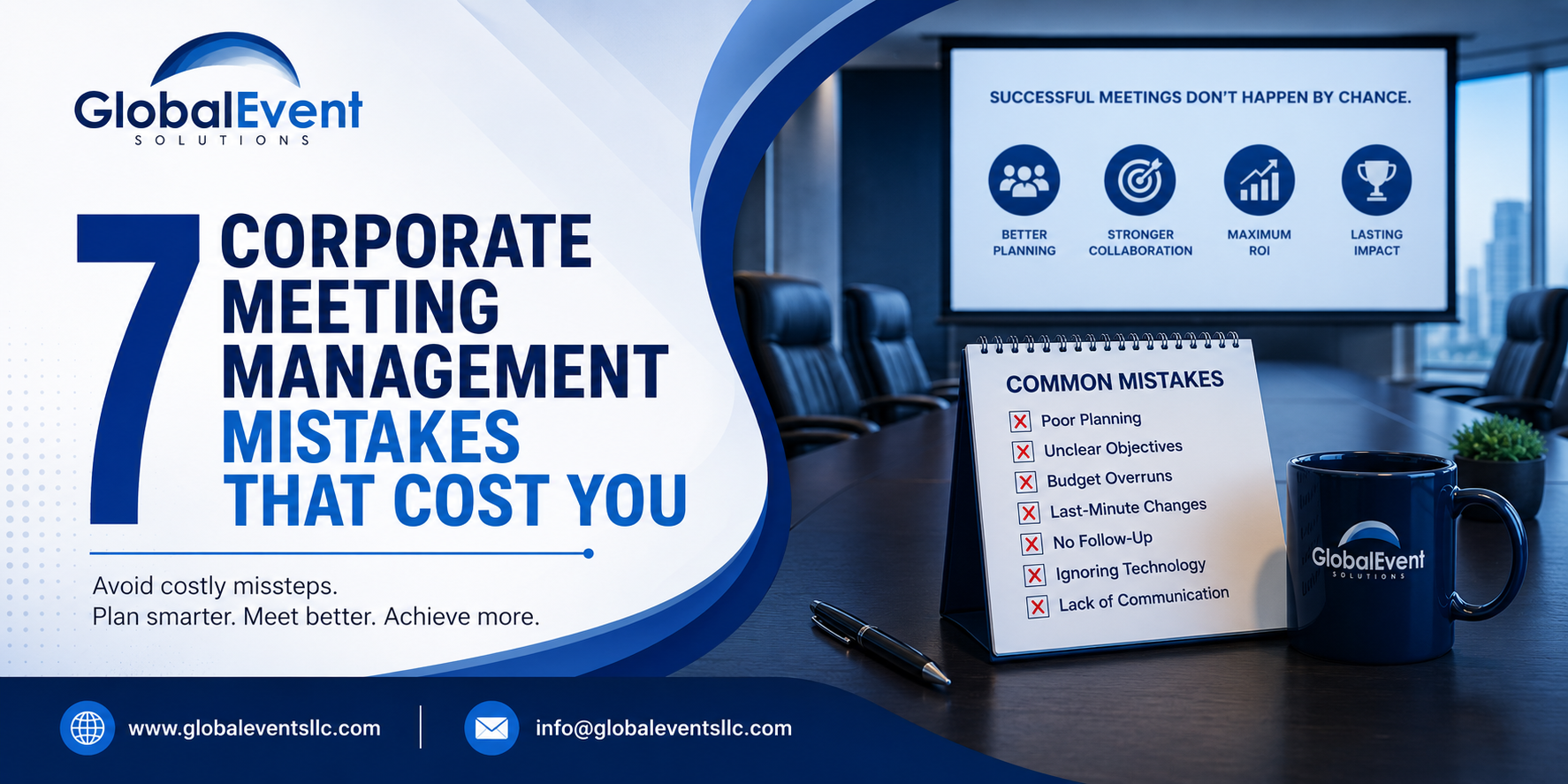
7 Corporate Meeting Management Mistakes That Cost You
Have you ever sat through a meeting that went nowhere? If that happened, the problem likely started long before the meeting began. Poor corporate meeting management wastes time. It wastes money too. It slows down decisions and drains everyone’s energy. The good news is simple. All of it can be fixed once you know what to watch for.
Here are seven common planning mistakes and how to fix each one.
Forgetting Purpose Before Planning
This sounds simple, but it is the biggest mistake of all. A team books the room. They send out invites. They pick a date. Then someone finally asks, “What is this meeting even for?” That question always comes too late. Nobody in the room knows what to do. No real decision gets made. The meeting turns into a boring update instead of useful time.
The fix is easy. Pick the purpose of the meeting first. Everything else comes after that. Strong corporate meeting management always starts with one clear goal.
Underestimating Venue and Logistics Needs
Picking a room just because it looks big enough is a rookie mistake. It wastes money too. Sound quality, room layout, tech setup, and food service all matter more than most people think.
A room that looks perfect on paper can fall apart fast. Picture 150 people trying to fit into a space made for 80. That room fails the moment people walk in. Good corporate meeting management means checking every small detail ahead of time. It is never as simple as writing a number on a spreadsheet.
Site selection also needs real time, not a rushed choice. Many teams treat this step like busywork. But the site shapes your budget, your guests’ comfort, your food options, and even how energized people feel walking in the door. Rushing this step almost always costs more money later.
Ignoring Contract Details Until It Is Too Late
Contracts are boring to read. That is exactly why people skip the fine print. That is also exactly where the real money problems hide. Words like attrition clause, cancellation fee, and force majeure sound dull until your company gets hit with a surprise fee because fewer people showed up than planned.
Reading the contract closely and asking for better terms before you sign can save real money. This is one reason corporate meeting management experts get brought in to handle these talks every day.
Overloading the Agenda
More topics on the agenda does not mean more gets done. Often it means the opposite. Trying to squeeze ten topics into ninety minutes means every topic gets a rushed, shallow talk. Nothing actually gets solved.
A short, focused agenda almost always beats a long, crowded one. When a team picks two or three important topics and gives each one real time, people leave with clear answers. When a team crams in too much, people leave with more questions than they started with.
Forgetting About the Attendee Experience
Many internal teams forget one simple truth. A meeting is not just information being shared. It is also an experience for the people sitting in the room. Is the room too hot or too cold? Is the pace too fast or too slow? Do people get breaks, or are they stuck sitting for three hours straight?
A poor experience lowers how much people pay attention and how much they get done. Strong corporate meeting management pays close attention to small things like room temperature, breaks, and seating. These small details shape how much people remember afterward.
No System for Tracking Follow-Up
This might be the most costly mistake on this list. The meeting ends. People mention a few action items out loud. Then nothing happens. There is no written record. No one gets assigned the task. No deadline gets set.
Without a clear follow-up system, meetings become one-time events instead of real steps toward a decision. Two things fix this fast:
- Give every action item a clear owner
- Attach a real deadline to each task
There is also a bigger problem hiding behind missed follow-ups. Companies lose useful information when meeting outcomes never get tracked the same way twice. Leaders cannot spot patterns or fix broken habits when every department runs meetings differently with no shared record. Good corporate meeting management includes steady documentation and clear accountability.
Trying to Handle Everything In-House Without the Right Bandwidth
Here is the simple truth. Internal teams are usually stretched too thin to manage every part of this alone. Asking your marketing coordinator or admin assistant to negotiate with vendors, book the venue, and solve problems on the day of the event is not fair to them or to your budget.
This is exactly why many companies turn to outside help. Skilled corporate meeting management providers bring strong buying power, solid vendor relationships, and sharp instincts built from running hundreds of meetings before. This is not about your team lacking skill. It is about time, bandwidth, and years of hands-on experience that take a while to build.
A good outside partner also frees up your internal team to focus on the work they were actually hired to do. Instead of chasing vendors and double-checking contracts, your team can spend that energy on the ideas the meeting was meant to produce in the first place.
Bringing It All Together
Every mistake on this list shares one thing in common. None of them happen because someone was careless. They happen because meeting planning gets treated like a simple checklist. Purpose gets skipped. Contract details get ignored. The agenda gets overloaded. Follow-up gets forgotten. All of it adds up, and the meeting ends up costing more than it delivers.
The good news is simple too. Every single one of these mistakes can be stopped by setting up the right corporate meeting management process from the very start.
Ready to Fix These Mistakes for Good?
Business meetings should never feel like a gamble. Are you running into the same problems again and again with logistics, contracts, and follow-through? It might be time to try something different. Global Event Services LLC can help your business with corporate meeting management, from contract talks all the way through to full execution. Reach out today, and we will show you a better way to run your meetings.
Frequently Asked Questions
01
What is the most common mistake organizations make with corporate meetings?
Skipping the purpose of the meeting before jumping into logistics. Every other step falls out of order when purpose is not set first.
02
How expensive can the contract negotiation phase really get?
The cost depends on many factors. Small details like attrition and cancellation clauses can quietly push the final bill much higher than expected.
03
Does it make sense to hire outside help for small internal meetings?
Usually not. But once logistics, contracts, or guest numbers get complicated, outside help tends to pay for itself quickly.
04
Why does follow-up tracking matter so much?
Without clear owners and action items, decisions made in the meeting go nowhere. Follow-up is the only real way to know the meeting was worth holding.
05
How can organizations improve the attendee experience without spending much more money?
Small changes go a long way. Comfortable seating, a good pace, and regular breaks all improve the experience without a big budget jump.
Recent Blogs
September 12, 2026

September 5, 2026
Why Your Business Needs a Corporate Event Planning Service

August 28, 2026
Why Every Business Needs a Corporate Event Organizer